TL;DR
- Bakers can sell digital products through a marketplace like Etsy, a hosted platform like ThriveCart, Gumroad or Stan Store, or through their own website.
- The right option depends on what you are selling, whether you already have an audience, and whether you need the platform to help people discover your product.
- If this is your first digital product, start simple. You do not need to build the selling setup you imagine having five years from now.
- Your selling platform does not create demand. You still need a way to build an audience and bring the right people to your product.
IN THIS ARTICLE
- Where Can Bakers Sell Digital Products Online?
- What Does a Digital Product Selling Platform Actually Do?
- Decide What You Are Selling Before You Choose Where to Sell It
- Selling Digital Products on Etsy Or Similar Marketplaces
- Hosted Platforms for Selling Digital Products
- Selling Digital Products On Your Own Website
- Do You Need a Website to Sell Digital Products?
- What Is the Best Platform to Sell Digital Products?
- Where to Sell Ebooks Online as a Baker
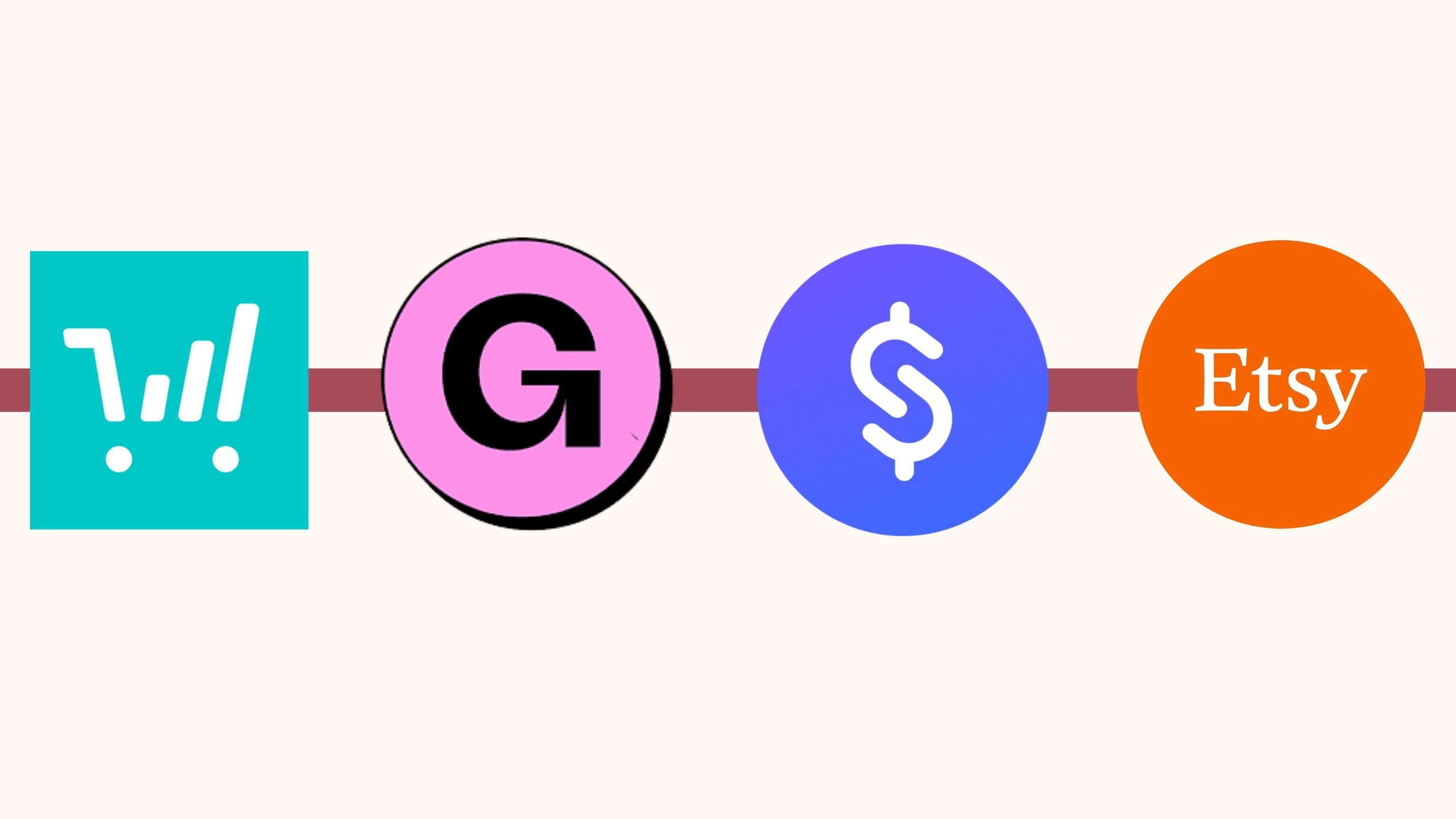
- How Do Etsy, ThriveCart, Gumroad and Stan Store Compare?
- How to Choose a Digital Product Selling Platform?
- Don’t Confuse Your Selling Platform With Your Audience
- Start With the Simplest Setup That Lets You Test Your Idea
- Where Should Bakers Sell Their First Digital Product?
Once you have decided that you want to turn some of your baking knowledge into a digital product, another question usually follows quite quickly: where are you actually going to sell it?
Perhaps you have created a recipe ebook, a cake decorating guide, a collection of templates or a resource designed to help other bakers. You know what you want to sell, but then you start looking at Etsy, Gumroad, Stan Store, ThriveCart, your own website and all the other options available, and choosing a platform suddenly feels much more complicated than you expected.
The good news is that you do not need to find one universally “best” platform.
The best place to sell a digital product depends on what you are selling, whether you already have an audience, how much control you want over the customer experience and, importantly, whether you expect the platform itself to help people discover your product.
That last distinction is one of the most important things to understand when deciding where to sell digital products online, because the place where someone finds your product and the technology you use to sell it do not necessarily need to be the same thing.
A baker might be discovered through Pinterest, send that visitor to a blog post on her website and use ThriveCart to process the eventual purchase. Another baker might be discovered through an Etsy search and complete the entire transaction within Etsy. Someone else might build an audience on Instagram and send followers directly to a Stan Store or Gumroad product page.
All three are selling digital products online, but they are using very different business models.
Where Can Bakers Sell Digital Products Online?
For most bakers, the options can be divided into three broad routes.
You can sell through a marketplace, such as Etsy, where your product sits inside an existing shopping platform.
You can use a hosted selling platform, such as ThriveCart, Gumroad or Stan Store, which provides much of the technology needed to take payments and deliver a digital product.
Or you can make your own website the centre of your digital product business, either processing transactions there or connecting the website to specialist checkout and payment tools.
None of those approaches is automatically better than the others. They simply solve different problems.
A marketplace can potentially put your product in front of people who have never heard of you. A hosted selling platform can make it relatively easy to take payments and deliver your product to an audience you already have. Your own website can give you considerably more control over your content, brand and customer journey.
Before comparing platforms, however, it helps to understand what you actually need your selling platform to do.
What Does a Digital Product Selling Platform Actually Do?
When someone says they need somewhere to “sell” an ebook, they are often combining several different parts of the selling process.
First, someone has to discover the product. They might find you through Pinterest, Google, Instagram, Facebook, YouTube, an email or a marketplace search.
Then they need somewhere to learn about the product. That could be an Etsy listing, a sales page on your website, a Gumroad product page, a Stan storefront or a ThriveCart page.
Next comes the checkout, where the customer decides to buy and enters their payment information.
Behind that checkout sits the payment processing. Depending on the platform, this may involve services such as Stripe or PayPal or may be handled differently by the platform itself.
Finally, your customer needs to receive the product. If they have purchased an ebook or guide, for example, you probably want the file to be delivered automatically rather than manually emailing PDFs every time somebody buys.
Some platforms handle most of these jobs. Others specialise in only part of the process.
Understanding those separate functions makes choosing a platform much easier because you can stop asking, “Which platform is best?” and start asking, “Which parts of this process do I actually need help with?”
Decide What You Are Selling Before You Choose Where to Sell It
Your product itself should influence the platform you choose.
If you are selling a recipe ebook or baking guide, your technical needs are relatively simple. You need somewhere to explain what the customer is buying, somewhere to take the payment and a way to deliver the PDF or other files afterwards.
If you are selling templates, calculators, checklists or printable bakery resources, the setup is similar, although you might eventually want to sell bundles or multiple related products.
A recorded baking class can be different. Suddenly you may need video hosting, protected lessons, customer logins or course functionality rather than simply delivering one downloadable PDF.
This is why I would not recommend choosing your platform before you understand the product you want to sell. It is very easy to spend weeks comparing software features that your first product may never need.
With that in mind, let’s look at the main options bakers have for selling digital products and how each one can suit different types of bakery digital products, audiences and stages of business.
Option 1: Selling Digital Products on Etsy Or Similar Marketplaces
Etsy is different from ThriveCart, Gumroad and Stan Store because Etsy is first and foremost a marketplace.
People already visit Etsy intending to browse and buy products, and Etsy has its own search system. Sellers can use titles, descriptions, categories and up to 13 listing tags to help products appear in relevant searches.
For a baker without an established audience, that potential discovery can make Etsy attractive. Someone searching Etsy for a baking planner, cake pricing template, recipe ebook or other baking resource may encounter your product without previously knowing your business exists.
Etsy can also handle the delivery of digital products. Sellers can create instant download listings, and buyers receive access to the files after their payment is confirmed. Etsy currently allows up to five files per digital listing, with a maximum size of 20 MB per file.
However, being inside a marketplace brings trade-offs. Your product sits alongside competing products, the presentation of your offer has to work within Etsy’s system, and you operate according to Etsy’s marketplace policies rather than having complete control over the customer journey.
There are also several fees to consider. At the time of writing, Etsy charges a $0.20 listing fee and a 6.5% transaction fee, in addition to payment-processing fees and certain other fees that may apply. For sellers with a UK bank account, Etsy’s current payment-processing fee is 4% plus £0.20 per order, and UK sellers are also subject to a 0.48% regulatory operating fee.
Etsy does have an important advantage for digital products when it comes to VAT. For digital downloads sold to buyers in countries where Etsy is required to collect VAT or similar taxes, Etsy calculates, collects and remits the applicable amount.
There is another trade-off that is easy to overlook: the customer relationship. Although Etsy sellers receive certain buyer information as part of a transaction, Etsy’s current Seller Policy specifically says that information received through an Etsy transaction cannot simply be used to add the buyer to your marketing list without proper consent.
That does not make Etsy a bad platform. The simple trade-off is that Etsy gives you access to its audience and the system it has already built for selling products, but you have to follow Etsy’s rules. Those rules may not always suit how you want to run your business, so it is important to understand them before deciding to sell there.
Option 2: Hosted Platforms for Selling Digital Products
If you already have a way of reaching potential customers, you may not need a marketplace to provide discovery. Instead, you may need somewhere that makes the actual selling process easier.
This is where hosted platforms such as ThriveCart, Gumroad and Stan Store become relevant. All three can be used to sell digital products, but they approach the job differently.
Selling Digital Products With ThriveCart
ThriveCart is the platform I currently use in my own digital product business, so it is the option here that I know most closely from first hand experience.
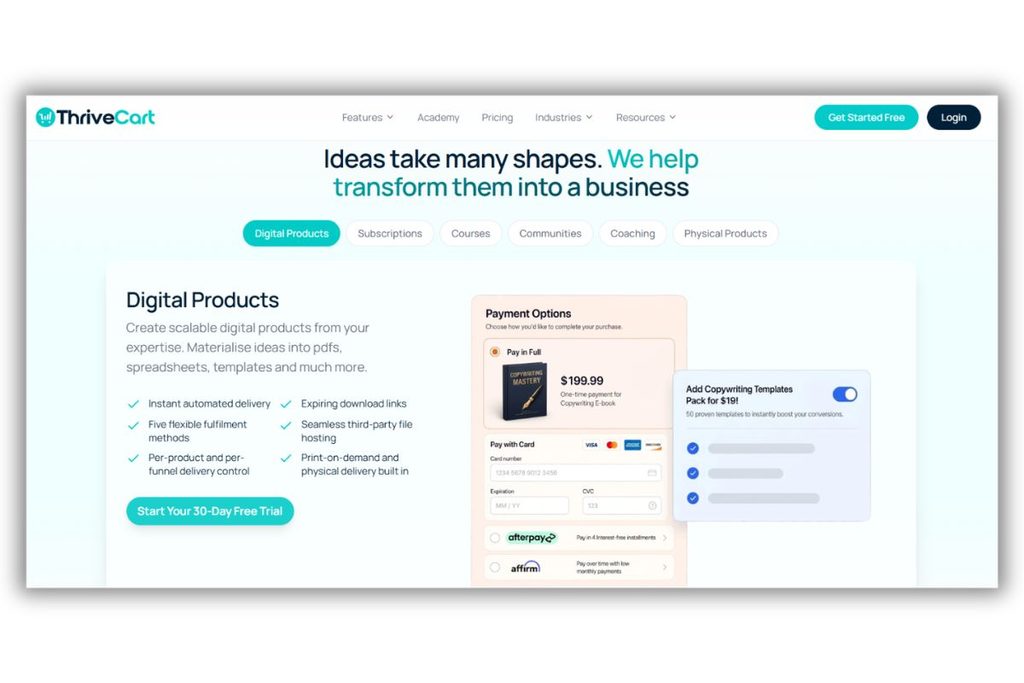
Rather than thinking of ThriveCart as a marketplace where people browse for products, I use it as the technology that helps me make the sale. My website and marketing bring people towards my products, while ThriveCart can handle elements such as the checkout, payment options and product delivery.
ThriveCart supports one-time payments, subscriptions and other payment structures, integrates with payment processors including Stripe and PayPal, and offers checkout and funnel functionality.
That makes it potentially useful for a baker who already has an audience, website, email list or another way of sending people towards an offer.
ThriveCart changed its pricing model in 2026 and now advertises Standard and Pro+ monthly and annual plans alongside some separate lifetime-license offers. Its published subscription pricing currently starts at $47 per month for Standard when paying monthly, or the equivalent of $37 per month when billed annually. Because its offers and plan structure have changed, I would always check the current pricing before deciding whether it makes financial sense for your particular product business.
If you want to try ThriveCart before committing, new customers can currently get a 30-day free trial on its subscription plans.
I will be covering exactly how I use ThriveCart to sell digital products in a separate guide, because the practical setup deserves an article of its own.
Selling Digital Products With Gumroad
Gumroad is another platform I have personally used, although I no longer use it as my primary selling platform.
One reason Gumroad has traditionally appealed to creators is its relatively simple setup. You can create digital products, send people directly to a product page and allow Gumroad to handle the purchase and delivery. Customers can access purchases through their Gumroad Library or through the download link provided with their receipt.
Unlike ThriveCart or Stan Store, Gumroad currently has no standard monthly subscription fee. Instead, it charges transaction-based fees. At the time of writing, direct sales through your profile or links are charged at 10% plus $0.50 per transaction, while sales generated through Gumroad’s Discover marketplace are charged at 30%.
Creators can also view customer information in the sales dashboard and export sales data, including customer and purchase information, although normal consent and marketing rules still apply when communicating with customers.
For someone who wants to start without committing to another monthly software subscription, that model may be attractive. The trade-off is that the transaction percentage becomes increasingly significant as sales grow.
Selling Digital Products With Stan Store
Stan Store takes a more visibly storefront-led approach and is heavily positioned towards creators who are already building audiences through social media.
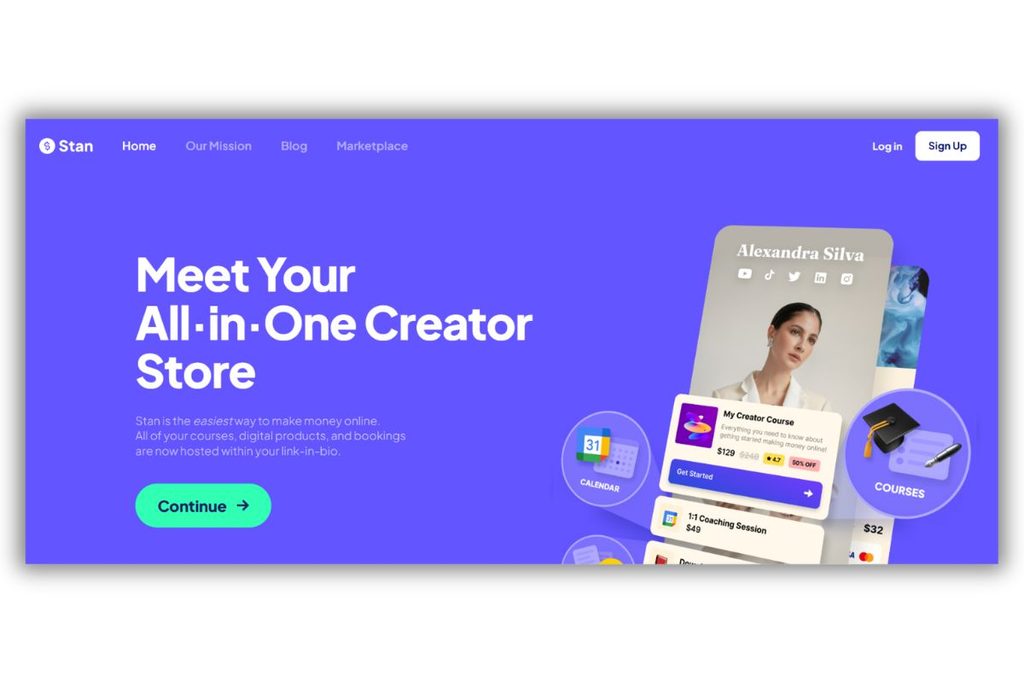
Its Creator plan currently costs $29 per month or $300 per year, while Creator Pro costs $99 per month or $948 per year. Stan says it takes a 0% platform transaction fee, although normal fees from connected payment processors such as Stripe and PayPal still apply.
For a recipe ebook or downloadable baking guide, Stan allows the creator to upload or link to the product so that the customer can receive access after buying.
I have not personally used Stan Store, so unlike ThriveCart and Gumroad I cannot speak about the day-to-day experience from my own business. But its current feature set makes it an option worth understanding if much of your audience-building happens through social media and you want a simple storefront connected to that audience.
Option 3: Selling Digital Products On Your Own Website
The third route is to make your own website the centre of your digital product business.
This is sometimes misunderstood because “selling through your own website” does not necessarily mean you have to build an enormous ecommerce store or code your own checkout system.
Your website can simply be the place where the customer discovers your expertise, reads your content and learns about your products, while specialist tools handle other parts of the transaction.
For example, you might have a WordPress website containing your blog and product sales pages, but a customer clicking the buy button is taken to ThriveCart for checkout.
Alternatively, your website could be connected more directly to payment tools such as Stripe or PayPal, or you could use ecommerce functionality that allows the entire purchase to remain within your own website.
The attraction is control – You decide how your products are presented, what supporting content surrounds them, what other resources the customer discovers and how your wider digital product business fits together.
Your website can also become part of your audience-building strategy. If you publish useful baking content that ranks in Google or use Pinterest to send people to your articles, the website can attract people long before they are ready to buy.
The trade-off is that simply building the website does not bring customers. You still need a strategy for traffic.
Do You Need a Website to Sell Digital Products?
No. A website can become a valuable business asset, but you do not need to build one before you are allowed to test whether people will buy your first digital product.
You could use Etsy, Gumroad, Stan Store or a hosted checkout platform and begin selling without first creating a large ecommerce website.
This is particularly important if you are still validating your idea.
If you have created a $19 baking guide and have people actively asking to buy it, spending the next six months building an elaborate website before allowing anybody to purchase may not be the best use of your time. Instead start with enough infrastructure to make the transaction work professionally.
A website becomes increasingly useful as you want to publish content, attract search traffic, build an email audience, sell several products and create a central home for the digital side of your baking business.
What Is the Best Platform to Sell Digital Products?
There is no single best platform to sell digital products because the answer changes depending on what your business needs the platform to do.
If your biggest problem is that very few people currently know you exist, a marketplace such as Etsy may be worth investigating because marketplace search creates an additional discovery opportunity.
If you already have an audience on Instagram, Facebook, Pinterest, YouTube or an email list, you may care less about marketplace discovery and more about having a simple way to take payments and deliver products. A hosted selling platform can potentially solve that problem.
If you are building a broader digital bakery product business with blog content, several products, email marketing and long term organic traffic, your own website may make sense as the central hub, even if another platform still handles your checkout.
And if this is your first digital product, keep it simple. You do not need to build the selling setup you imagine having five years from now. A simple hosted platform may be all you need to start, especially if you already have an audience you can promote the product to. You can always build something more advanced later as your digital bakery product business grows.
READY TO TEST YOUR OWN IDEA?
Turn audience interest into one digital product idea worth testing.
The Digital Bakery Starter Plan helps you narrow your ideas down to one product and work out whether there’s enough interest before you spend weeks creating it.
Where to Sell Ebooks Online as a Baker
If your product is specifically a recipe ebook or baking guide, you do not need to sell it through a traditional ebook retailer like Amazon Kindle, Apple Books or another ebook retailer. You can sell it directly to your audience as a downloadable PDF using Etsy, a hosted selling platform or your own website.
Imagine that you have created a $19 guide called The Home Baker’s Guide to Stable Buttercream. It contains your buttercream recipes, troubleshooting advice, temperature guidance, colouring tips and instructions for getting consistent results.
If the people buying it are primarily bakers who discover you through your existing content, you may simply need a page that explains the guide, a reliable checkout and automatic PDF delivery.
You could list it on Etsy and try to reach people searching the marketplace for buttercream resources.
You could send your social media audience to your selling page created with Gumroad or Stan Store.
You could write useful buttercream articles on your own website, attract readers through Pinterest or Google and send interested readers to a ThriveCart checkout.
The product is the same. What changes is how customers discover it and how the sale is processed.
This is why deciding where to sell an ebook should begin with where your buyers are likely to find you and how you want them to buy rather than the actual software.
If you are still wondering whether recipes themselves can become a viable product, Kylie’s experience with selling baking recipes online shows how one proven cake recipe became the starting point for a wider digital product business.
How Do Etsy, ThriveCart, Gumroad and Stan Store Compare?
The platforms become easier to understand when you compare the role each one plays rather than trying to compare feature lists.
| OPTION | MAIN ROLE | BUILT-IN DISCOVERY | TYPICAL COST MODEL | DIGITAL DELIVERY | CUSTOMER RELATIONSHIP |
|---|---|---|---|---|---|
| Etsy | Marketplace | Yes, through Etsy search | Listing, transaction, processing and other applicable fees | Yes | More restricted because the relationship operates inside Etsy’s marketplace |
| ThriveCart | Hosted checkout/selling platform | No meaningful marketplace discovery | Monthly/annual plans; some separate lifetime offers may also be available | Yes | You generally bring and manage your own audience |
| Gumroad | Hosted selling platform with optional Discover marketplace | Some, through Gumroad Discover | Transaction-based rather than a standard monthly subscription | Yes | Customer data and sales exports available, subject to marketing consent |
| Stan Store | Hosted creator storefront | Primarily designed for you to bring your audience | Monthly or annual subscription | Yes | Customer and lead collection built into the platform |
| Your website | Owned marketing/sales hub | Potential discovery through search, Pinterest and other channels | Depends entirely on your setup | Depends on the tools you connect | Highest potential control, subject to your own legal and privacy obligations |
That table is not designed to tell you which platform “wins”. It should help you identify what you actually need.
How to Choose a Digital Product Selling Platform?
Before committing to a platform, I would look beyond how attractive the product page looks and ask a few practical questions:
- Can it sell and automatically deliver the type of product I am creating?
- Where will buyers come from?
- What will I pay if I make no sales, and what will I pay if I make a lot of sales?
- Who is responsible for VAT or other applicable sales taxes?
- Which payment methods can customers use?
- Can I access and export the customer information I legitimately need?
- Can it connect with my email marketing setup?
- What happens if I later want to sell bundles, additional products or higher-priced offers?
- How much control do I have over the sales page and checkout?
- And, importantly, how difficult would it be to move my business elsewhere in the future?
The answers will matter differently depending on your stage of business. For example, a baker testing a $9 printable does not necessarily need the same setup as a baker with ten digital products, a large email list and $50,000 a year in digital product sales.
Don’t Confuse Your Selling Platform With Your Audience
This may be the most important point in the entire comparison. Creating a ThriveCart account does not create an audience.
Opening a Stan Store does not create an audience.
Building your own website does not create an audience.
Gumroad does offer its Discover marketplace, and Etsy has a substantial marketplace and internal search system, but simply listing a product on either still does not guarantee that the right people will find it or buy it. You need a way of connecting your knowledge with people who care about it.
That audience could come from Pinterest, Google, Instagram, Facebook, YouTube, an email list, your existing bakery customers, a community you have built or a combination of several channels.
Where you sell the product solves the technical side of the transaction. It does not automatically solve the audience problem.
I will be exploring how to build an audience for bakery digital products separately because that question deserves much more attention than simply telling bakers to “post consistently” on social media. But in the mean time, read how you can launch a recipe ebook with a small audience when that audience is highly relevant to what you sell.
Start With the Simplest Setup That Lets You Test Your Idea
There is a temptation when starting with digital products to build everything at once – a website, course platform, an elaborate email funnel, several products, a complicated checkout, a new social account.
And months can pass before anybody has actually been asked to buy something.
I would approach it differently. Work out what you want to sell and who it helps. Look for evidence that those people are interested. Then choose the simplest setup that lets them understand the offer, pay for it and receive what they bought. Yessica Vera’s cookie pie launch is a useful example of how a baker can validate demand before creating a product through questions, testing and audience feedback.
If demand develops, your infrastructure can develop with it.
You can move from a simple selling page to a website. You can add better checkout tools. You can build email automation. You can introduce bundles, upsells, memberships or courses later.
Your first platform does not have to be your platform forever.
So, Where Should Bakers Sell Their First Digital Product?
Instead of asking which platform everybody else uses, start with three questions.
Do you need the platform itself to help people discover your product?
Do you already have an audience or another source of traffic that you can send towards the offer?
And what does the product actually require in order for somebody to buy and receive it?
A marketplace such as Etsy can make sense when marketplace discovery is an important part of the strategy.
A hosted platform such as ThriveCart, Gumroad or Stan Store can make sense when you have somewhere else to find and nurture potential customers and primarily need technology to handle the transaction.
Your own website can become the centre of a larger digital product business when you want more control over your content, brand, traffic and customer journey. For some bakers, digital products are part of a wider goal to scale a home bakery without baking more, rather than simply adding another product to sell.
You can also combine these approaches. The important thing is not to spend months looking for the perfect platform.
Choose a setup that makes sense for the product and audience you have now, learn from what happens when you put that product in front of real people, and allow the technology to become more sophisticated as the business actually requires it.
FREQUENTLY ASKED QUESTIONS
Questions bakers often ask about digital products
Where is the best place to sell digital products online?
There is no single platform that is best for every seller. A marketplace such as Etsy may suit someone who values marketplace discovery, while a hosted platform such as ThriveCart, Gumroad or Stan Store may suit someone who already has an audience to send towards a product. Your own website can provide more control if you are building a larger digital product business.
Can I sell digital products without a website?
Yes. You can sell through marketplaces and hosted selling platforms without having your own website. A website can become useful for building your brand, attracting search traffic, publishing content and selling multiple products, but it does not need to be the first thing you build.
Is Etsy good for selling digital products?
Etsy can be useful for digital products because customers already search its marketplace and Etsy can automatically deliver digital files after purchase. However, sellers need to consider competition, fees, marketplace rules and the restrictions surrounding how Etsy buyer information can be used outside the platform.
What is the easiest way to sell my first digital product?
Start with the simplest setup that can reliably take a payment and deliver your product. You can always change or expand your technology later. For a first product, validating that people actually want what you are selling is usually more important than building the most sophisticated ecommerce system available.