TL;DR
- Yessica Vera built a highly focused audience around cookie pies before launching her paid recipe ebook.
- She used helpful content, community questions, polls and recipe testers to validate demand and improve the product before selling it.
- A free Cookie Pies 101 guide helped her move interested bakers onto an email list ahead of the paid launch.
- Her launch shows the value of talking about a digital product while you are creating it, using pre-launch content to build awareness, interest and proof before launch day.
IN THIS ARTICLE
- Who Is Yessica Vera and What Is the Ultimate Cookie Pie Guide?
- How Yessica Vera Chose Cookie Pies for Her Recipe Ebook
- How Yessica Vera Built an Audience Before Launching Her Recipe Ebook
- How Yessica Vera Used Facebook Groups to Grow Her Cookie Pie Audience
- How The Cookie Pie Corner Became Market Research for Her Recipe Ebook
- How Recipe Testers Helped Yessica Vera Validate Her Cookie Pie Recipes
- How Yessica Vera Used a Free Cookie Pie Guide to Build Her Email List
- How Yessica Vera Launched the Ultimate Cookie Pie Guide
- How Customer Results and Social Proof Supported the Ebook Launch
- How Yessica Vera Continued Selling the Recipe Ebook After Launch
- Why Yessica Vera Started With a Recipe Ebook Instead of a Course
- What Bakers Can Learn From Yessica Vera’s Recipe Ebook Launch
- Digital Product Frequently Asked Questions
Creating a digital product as a baker does not always begin with sitting down and deciding to write an ebook.
Sometimes it begins with noticing that people keep asking about the same thing.
That is what makes the launch of Yessica Vera’s Ultimate Cookie Pie Guide interesting. Rather than creating a broad baking ebook containing a collection of unrelated recipes, Yessica concentrated on one specific type of product: thick, filled cookie pies.
She then built an audience around that subject, shared free information, watched the questions people were asking, tested her recipes with other bakers, created a free introductory guide and eventually launched a much more comprehensive paid product.
The result is a useful example of how a baker can turn specialised baking knowledge into a digital product without first needing to build an enormous general audience.
This case study looks at the launch I observed between April and August 2026 and at the publicly available information about Yessica’s product today.
Who Is Yessica Vera and What Is the Ultimate Cookie Pie Guide?
Yessica Vera is the baker behind Yessitssweet, where her digital products and baking content include cookie pies alongside other products such as cake pops and cookies.
Her Ultimate Cookie Pie Guide is a digital resource designed for home bakers, cottage bakers and dessert businesses that want to learn how to make thick, filled cookie pies.
Today, the product is priced at $49.99 and has developed into a 75-page guide. It includes six signature cookie-pie recipes as well as information about filling stability, assembly, baking, decorating, troubleshooting, packaging, selling, customer care and recommended supplies.
That is important because the product is not simply a PDF containing six recipes. It packages Yessica’s knowledge of the entire process surrounding those recipes.
And when you look back at how the product developed, you can see that many of those topics were already appearing in the conversations she was having with bakers before the full guide went on sale.
How Yessica Vera Chose Cookie Pies for Her Recipe Ebook
One of the strongest things about Yessica’s product is its focus. It wasn’t a general cookbook called My Favourite Baking Recipes. It wasn’t an attempt to teach cookies, cakes, brownies, cupcakes and desserts in one product.
It was only about cookie pies.
That specificity made it much easier to identify who might be interested in the product. Bakers who were seeing thick stuffed cookie pies online and wanted to learn how to make them had an obvious reason to pay attention.
During April 2026, Yessica was already publishing information about the details involved in making them successfully. She discussed issues such as the type of pan to use, how long the dough needed to chill, how fillings affected the structure of the finished product and why some cookie pies became overly sweet.
She also addressed common problems such as sunken centres and undercooked dough.
In other words, she wasn’t only displaying attractive finished cookie pies. She was demonstrating knowledge around the problems that other bakers encountered when trying to make them.
That distinction matters when expertise is going to become a digital product. A beautiful finished bake can attract attention, but it is often the baker who can explain why something works, why it fails and how to reproduce the result who has knowledge that can be packaged and sold.
How Yessica Vera Built an Audience Before Launching Her Recipe Ebook
On 22 April 2026, Yessica created a Facebook group called The Cookie Pie Corner.
The group was deliberately narrow. It wasn’t a general home-baking community. It was created for people interested specifically in cookie pies, including people who had never made one and bakers who already had some experience.
That meant nearly every conversation taking place inside the community was potentially useful to someone developing a cookie-pie product.
Questions about pans, fillings, recipes, texture and structure all mattered.
Questions from bakers wondering whether they could add cookie pies to their businesses mattered.
Yessica was also visible in other baking communities, where she contributed useful cookie-pie information. That was how I originally discovered her work. Rather than relying solely on people somehow finding her new Facebook group, she was participating in places where bakers interested in the subject already gathered.
As people became interested in learning more, some of them moved into her own community.
That gave Yessica something significantly more useful than simply accumulating unrelated followers. She was gathering people around the exact subject that would eventually become her paid product.
How Yessica Vera Used Facebook Groups to Grow Her Cookie Pie Audience
Once The Cookie Pie Corner existed, Yessica could see what potential customers actually wanted help with.
Shortly after starting the community, she used a poll to ask members about their experience with cookie pies. The largest response came from people who had not yet started making them because they felt unsure about doing so.
That is useful information for someone creating an educational product.
It means that the opportunity isn’t necessarily just another collection of interesting flavours. There is an audience that needs help getting from “I want to make this” to “I know how to make this successfully.”
The conversations in the group reinforced that.
Members asked what pans they should use. They wanted to understand fillings. They asked how cookie pies were assembled. They asked whether recipes were available. Later, some started asking where they could purchase Yessica’s guide.
Yessica also used polls to ask members which flavours interested them.
This meant product development was happening alongside real customer conversations rather than entirely inside Yessica’s head. That is an important distinction. A baker can think an ebook idea is brilliant. What matters commercially is whether other people are giving signals that the knowledge is valuable to them.
How The Cookie Pie Corner Became Market Research for Her Recipe Ebook
Yessica didn’t disappear for several months, create a finished ebook and then suddenly announce that she had something to sell. The development was visible.
By 27 April, only days after creating the Facebook community, she was already letting members know that her own cookie-pie recipes were coming. She continued sharing experiments, tips and flavour ideas while developing them.
As May progressed, members could see more signs that a product was being created. She discussed recipes that were coming soon. She showed glimpses of what she was working on.
When people asked whether recipes were available for purchase, she explained that her own were being developed.
That gradually changed the audience’s relationship with the eventual product.
By the time the ebook arrived, it wasn’t something they had heard about for the first time that morning. They had watched part of the process unfold.
That is also a core part of how I teach digital product launches. I encourage bakers not to wait until launch day to suddenly announce that they have something to sell. Pre-launch content should begin while the product is still being developed, talking about what you are creating, why you are creating it, the problem it is designed to solve and even parts of the development process. By the time the product is ready, the audience already understands where it came from and why it may be relevant to them.
How Recipe Testers Helped Yessica Vera Validate Her Cookie Pie Recipes
On 14 May, Yessica asked for five bakers to test some of the recipes she was developing.
This was more than giving a few people free recipes.
She asked testers to follow the instructions carefully, complete the tests within a particular period and provide detailed feedback.
Testing a recipe with other people is especially important when a baker plans to sell it digitally.
When you have made something repeatedly, there are parts of the process you stop consciously thinking about. You know what the dough should look like. You instinctively recognise the right texture. You may make tiny adjustments without even realising you are doing them.
A customer downloading an ebook does not have that context.
Putting the instructions in another baker’s hands can reveal what needs to be clearer before the finished product reaches paying customers.
It also had another effect in Yessica’s case.
Testers began producing cookie pies using her recipes. Their results provided early evidence that the recipes could work outside Yessica’s own kitchen.
That proof later became useful when the product was ready to sell.
How Yessica Vera Used a Free Cookie Pie Guide to Build Her Email List
The next part of the launch happened on 28 May. Yessica released a free introductory resource called Cookie Pies 101. This is one of the more interesting parts of the launch because the free guide wasn’t simply posted as a downloadable file and forgotten.
People who requested it joined her email list. Yessica explained that downloaders would become part of her VIP list and would receive a special launch code when the full product became available.
The free product therefore performed several jobs at once.
It helped beginners.
It demonstrated Yessica’s knowledge.
It identified people who were interested enough in cookie pies to request additional information.
And crucially, it moved some of those people from Facebook onto an email list that Yessica could contact directly when the paid guide launched.
The connection between the free and paid products was also very tight.
Someone downloading an introduction to cookie pies is a logical potential customer for a much more detailed cookie-pie product.
That is quite different from attracting email subscribers with an unrelated freebie and later trying to convince them to purchase something they never expressed an interest in.
How Yessica Vera Launched the Ultimate Cookie Pie Guide
On 11 June, Yessica announced that her full cookie-pie ebook would be released the following day. At that point, The Cookie Pie Corner had existed for less than two months. But a considerable amount had already happened.
People had joined a dedicated community.
Yessica had been teaching inside it.
Members had been asking questions.
Recipes had been tested.
Potential customers had seen previews.
A free guide had been released.
An email list of particularly interested bakers had been created.
And some bakers had already produced successful results with Yessica’s recipes.
This is what made the eventual sales message different from simply announcing an ebook to a cold audience – There was already context around the product.
How Customer Results and Social Proof Supported the Ebook Launch
Around the launch, Yessica began sharing feedback and results from people who had tried her recipes.
After launch, members also shared cookie pies they had created.
That gave new potential customers something different from a product description.
They could see evidence that people other than the creator were following the recipes.
This matters particularly for a baking digital product because the buyer’s fundamental concern is often not whether the ebook looks attractive. It is whether the recipe will work.
Yessica continues to use customer feedback on the current product page. The sales page includes reviews from bakers discussing the results they achieved with the recipes and how they intended to use cookie pies within their own baking businesses.
The product therefore accumulated social proof through use rather than relying solely on Yessica’s own claims about it.
How Yessica Vera Continued Selling the Recipe Ebook After Launch
Another notable part of this case study is what happened after the launch period. Yessica continued helping inside The Cookie Pie Corner.
Members continued asking questions and sharing results. Yessica continued discussing techniques and troubleshooting. She also continued asking the community questions and testing interest in different flavours.
The product was promoted again at different points, including through limited discounts, but the group did not become solely a stream of advertisements.
New members could still enter the community because they were interested in learning about cookie pies rather than because they were already customers.
By 9 August 2026, less than four months after the group was created, Yessica announced that The Cookie Pie Corner had reached 4,000 members. That number should not be confused with 4,000 customers. We do not know how many people purchased the guide.
But it does show how quickly a highly specific community can grow when it is centred on something people actively want to learn about.
Why Yessica Vera Started With a Recipe Ebook Instead of a Course
There is another reason I think Yessica’s example is useful for bakers interested in digital products. She did not begin by trying to create an enormous online course. She packaged a defined area of expertise into an ebook.
The current guide is substantial at 75 pages, but it is still a relatively simple digital product format. There is no complicated learning platform required, no library of dozens of video modules and no elaborate membership that needs to be continually maintained.
That allowed the product itself to remain closely connected to the thing people wanted: the recipes and knowledge required to make cookie pies successfully.
For an experienced baker considering their first digital product, that can be an important lesson. The value of a digital product does not necessarily come from making it technologically complicated. It comes from whether it helps the customer solve a problem they care about.
READY TO PACKAGE YOUR RECIPES?
Turn the recipes people already ask you for into a professional ebook.
If your audience is already asking for recipes, saving your baking content or messaging you for tips, you may already have the beginnings of a digital product.
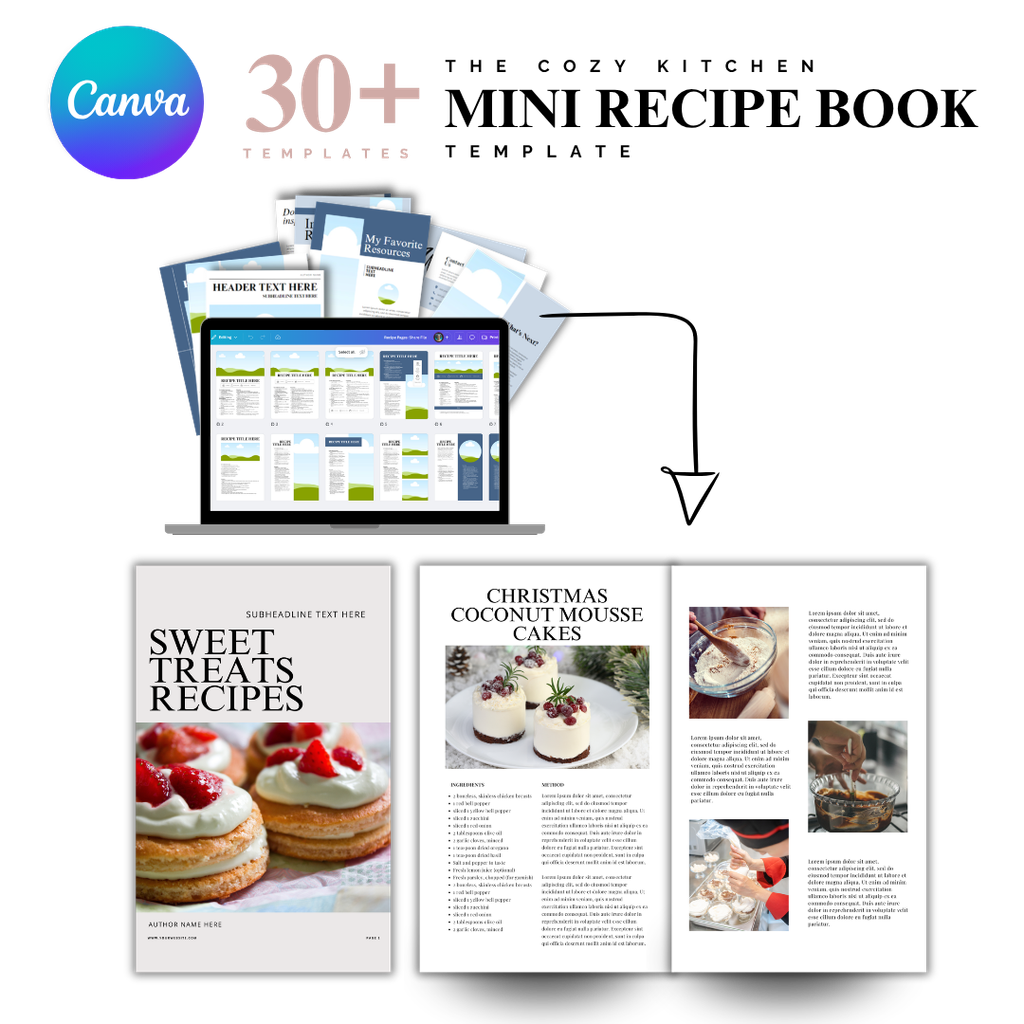
The Recipe eBook Template gives you a done-for-you structure to turn those recipes into a polished ebook you can sell without starting from a blank page.
What Bakers Can Learn From Yessica Vera’s Recipe Ebook Launch
Yessica’s story is a useful reminder that a digital baking product does not have to begin with a huge social following or a massive course.
It can begin much closer to the baker’s existing expertise.
A particular recipe people repeatedly ask about. A technique people struggle to reproduce. A style of decorating you have become particularly good at. A product that your customers or other bakers constantly want to understand.
Yessica concentrated on cookie pies and built the surrounding audience and product around that one subject.
The bigger lesson isn’t that every baker should start a Facebook group or create a free guide exactly as she did.
It is that specific expertise can become a digital product when there is a clear audience for it and the baker pays attention to what that audience actually needs.
For bakers wondering how that process could work from beginning to end, I have also broken the strategy behind Yessica’s launch down in my guide to How to Launch a Recipe Ebook Before You Have a Huge Audience.
Editorial note
This case study was independently researched using observations of Yessica Vera’s 2026 cookie pie launch and publicly available product information. Yessica Vera did not participate in the preparation of the original article. If she contributes additional information or comments, the article will be updated accordingly.