
TL;DR
- Sabrine Sanon spent years perfecting the whipped ganache fillings that eventually became a signature part of her cake business.
- Instead of creating a broad baking course, she packaged this specific expertise into Whipped Ganache Mastery, a recipe ebook purchased by bakers around the world.
- Her story shows that some of the best digital product ideas for bakers can come from recipes, techniques or processes customers already ask about and associate with your baking.
- You don’t need to package everything you know. Start by asking: What recipe, technique or baking skill have I already developed that someone else would find useful?
IN THIS ARTICLE
- How Sabrine Sanon Built Her Expertise as a Cake Designer
- How Whipped Ganache Became Sabrine’s Signature Cake Filling
- How Sabrine Turned Her Whipped Ganache Recipes Into a Recipe Ebook
- Why Bakers Will Pay for Recipes They Could Find for Free
- How a Niche Baking Ebook Can Become a Scalable Digital Product
- How Free Baking Recipes Can Help Sell a Paid Recipe Ebook
- Digital Product Ideas Bakers Can Learn From Sabrine’s Story
- Do You Need a Huge Audience to Sell a Baking Ebook?
- How Bakers Can Turn Existing Expertise Into Digital Products
- Ready to Turn Your Baking Recipes Into a Digital Product?
For home bakers and cake business owners exploring digital products, one of the hardest decisions is often figuring out what to sell. Should you create a recipe ebook, an online baking course, a decorating tutorial, a membership, or something completely different? And how much information do you actually need before someone will be willing to pay for what you know?
The story of Sabrine Sanon, the cake designer and educator behind Sab Pastries, provides an interesting example because her digital product business grew from something much more specific: the whipped ganache fillings that had already become a distinctive part of her cakes.
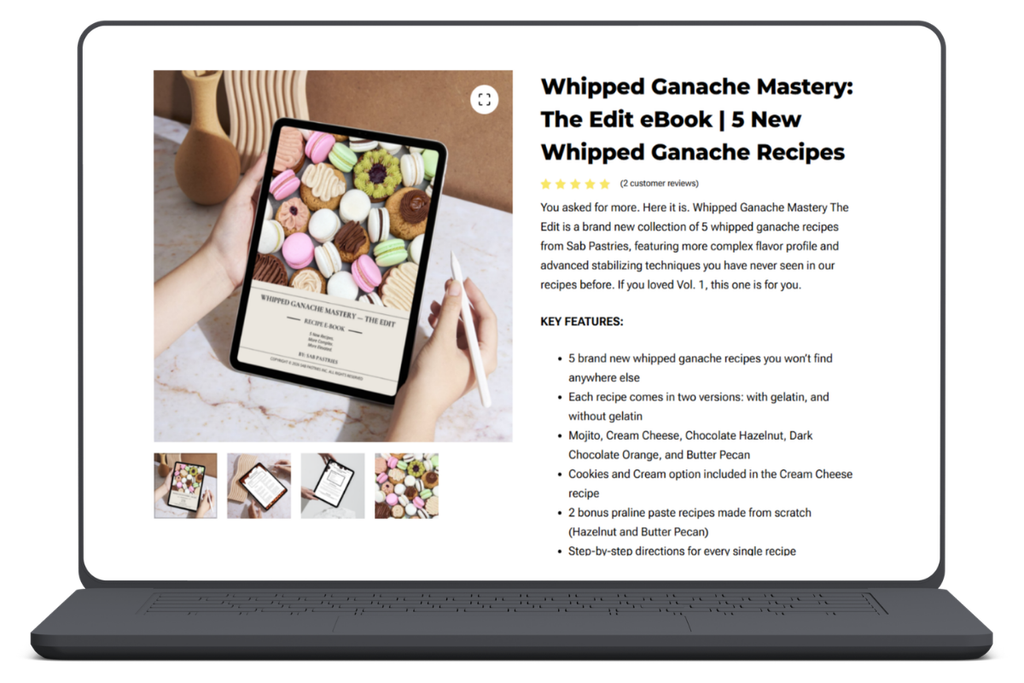
Rather than trying to package everything she knew about baking into one enormous product, Sabrine took an area of expertise she had spent years developing and turned it into Whipped Ganache Mastery, a specialised recipe ebook for bakers.
Her story offers an important lesson for home bakers considering selling recipes or other digital baking products online. Your first digital product does not necessarily need to cover everything you know. Sometimes a much stronger product can be built around one recipe, technique, process or skill that people already associate with your baking.
How Sabrine Sanon Built Her Expertise as a Cake Designer
Before building Sab Pastries, Sabrine’s professional background was in finance. She has described herself as a financial analyst by trade, with a Bachelor of Commerce degree in finance, while also pursuing postgraduate study in the field.
Her baking business began far away from a large commercial operation. She started making cakes from her apartment in Winnipeg before later relocating to Montreal and moving into her first commercial kitchen.
But an important part of the story happened before she began teaching other bakers or selling digital products.
Sabrine says she spent around four years refining and testing her core cake recipes.
She was particularly interested in addressing something she had noticed about celebration cakes: cakes could be visually impressive without necessarily delivering the same experience when they were eaten. Influenced by French pastry techniques, she wanted her cakes to be recognised for flavour and texture as much as their appearance.
That meant experimenting with recipes, fillings and techniques until she developed products she felt confident serving to customers.
For a baker thinking about creating a recipe ebook, this part of Sabrine’s story is worth paying attention to. The knowledge that eventually became valuable as a digital product did not begin as information created specifically for an ebook. It began as knowledge developed through the everyday work of improving her own baking business.
How Whipped Ganache Became Sabrine’s Signature Cake Filling
One of the clearest examples of this was Sabrine’s approach to cake fillings.
Instead of using buttercream between her cake layers, she became known for using whipped ganache. She has explained that this was partly influenced by the preferences of her customers and the baking culture around her. She wanted a filling that felt lighter and softer while still delivering the flavour and quality she wanted from her cakes.
Over time, those fillings became more than another component of her recipes. They became a point of differentiation.
Customers began associating the fillings with her cakes, while other bakers became interested in learning how she created them. What had started as a technical choice within her cake business was becoming something valuable in its own right.
This is an important distinction for bakers looking for digital product ideas. You may not need to invent an entirely new subject to teach. A potential product could already exist inside the way you work.
It could be the buttercream recipe customers repeatedly compliment, the cookie texture you have spent years perfecting, your method for creating stable fillings, the cake jar flavours that consistently sell out, the decorating technique other bakers ask you to demonstrate, or the production system that helps you prepare large orders efficiently.
Those repeated questions and customer reactions can be useful signals because they show you where people already perceive value in your knowledge.
How Sabrine Turned Her Whipped Ganache Recipes Into a Recipe Ebook
Sabrine eventually packaged that expertise into Whipped Ganache Mastery, a digital recipe ebook focused specifically on whipped ganache recipes and techniques.
This is where her story becomes particularly relevant to bakers who assume an ebook needs to contain a huge collection of unrelated recipes in order to have value.
Instead, Sabrine went narrow. Her ebook brought together whipped ganache flavours such as vanilla bean, dark chocolate, milk chocolate, mango, passionfruit, guava, lemon, strawberry, raspberry, coconut, pistachio, salted caramel, Lotus Biscoff, peanut butter, praline, matcha and coffee.
But the value of the product was not simply the ingredient lists.
Sabrine also taught the processes behind the recipes, including detailed steps and troubleshooting guidance. She regularly used her educational content to explain why particular steps mattered.
For example, when teaching her vanilla bean whipped ganache, she explained the difference between heating all of the cream and combining heated cream with cold cream later in the process. To someone unfamiliar with the technique, that might appear to be a small detail. To Sabrine, it affected the airiness, softness and creaminess of the finished ganache.
That is an important lesson for anyone thinking about selling recipes online.
A recipe ebook does not have to derive its value solely from access to a secret list of ingredients. Your experience can also help someone understand the process, avoid mistakes, troubleshoot problems and achieve a more consistent result.
READY TO PACKAGE YOUR RECIPES?
Turn the recipes people already ask you for into a professional ebook.
If your audience is already asking for recipes, saving your baking content or messaging you for tips, you may already have the beginnings of a digital product.
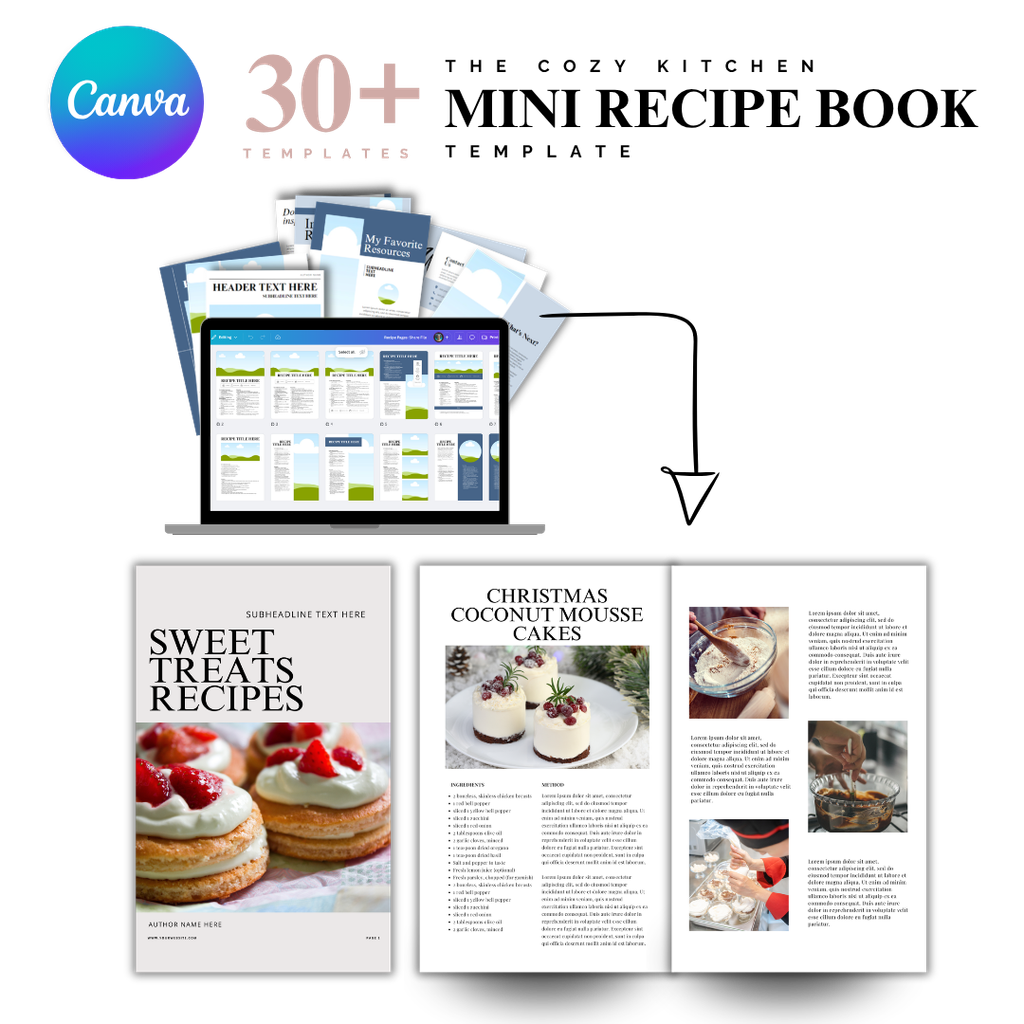
The Recipe eBook Template gives you a done-for-you structure to turn those recipes into a polished ebook you can sell without starting from a blank page.
Why Bakers Will Pay for Recipes They Could Find for Free
One of the common concerns bakers have about creating a recipe ebook is simple: why would somebody pay for recipes when so many are available for free online?
Sabrine has addressed this question directly in her own content.
Her argument is essentially that her recipes are business assets. They have been developed, tested and used in her own cake business, and they are also used by other bakers who want dependable recipes they can incorporate into their work.
That distinction is useful.
When someone purchases a well-developed recipe ebook, they may not simply be paying for information. They may be paying to reduce experimentation and uncertainty.
For a professional or aspiring professional baker, knowing that a recipe has been repeatedly tested can be valuable. Detailed instructions, troubleshooting information, flavour variations and guidance based on real-world use can make a paid recipe resource considerably different from finding an isolated recipe through a search engine.
We can see the same principle elsewhere in the baking market. Digital baking products currently being sold online combine recipes with elements such as troubleshooting guidance, step-by-step photographs, scaling instructions, technique videos and business applications.
The opportunity, therefore, is not necessarily to possess information that cannot be found anywhere else. It is to package your particular knowledge and experience in a way that makes it genuinely useful to the person buying it.
How a Niche Baking Ebook Can Become a Scalable Digital Product
Another interesting part of Sabrine’s story is the reach her digital product achieved.
She has reported selling her ebook to thousands of bakers across more than 120 countries.
That matters because the original subject of the product was remarkably specific. Whipped ganache is not “everything you need to know about baking.” It isn’t even everything you need to know about cake decorating.
It solves a much narrower problem.
But that specificity gives the product a clear audience. A baker interested in improving cake fillings can immediately understand why the resource might be relevant to them.
Digital products also remove one of the physical constraints that traditional baking businesses face. A cake can generally only be made once and sold once. A digital recipe, guide or class can be purchased repeatedly without requiring the baker to remake the physical product for every customer.
For bakers who already earn through custom orders, markets, classes or other hands-on work, this creates a different way to monetise knowledge they have accumulated through the business.
It does not mean abandoning physical baking. Instead, digital products can become another part of the business model.
How Free Baking Recipes Can Help Sell a Paid Recipe Ebook
Sabrine’s approach to free content also provides a useful lesson for bakers worried that sharing recipes publicly will prevent people from buying their digital products.
She has shared recipes and educational content openly, including a free vanilla bean whipped ganache recipe. She has said that this particular free resource was requested by more than 100,000 people.
Rather than giving away the entire value of her paid product, the free recipe allowed people to experience her teaching and her approach to ganache.
Her paid product could then go considerably deeper, offering a larger collection of flavours, detailed processes and troubleshooting information.
This creates a simple relationship between free and paid content.
The free resource solves a small problem and demonstrates expertise. The paid product provides greater depth, range or convenience for the person who wants to continue.
For a baker creating a recipe ebook, that could mean giving away one recipe from a larger collection, sharing one element of a decorating technique, providing a short troubleshooting guide, or teaching one useful part of a broader method.
Free content does not automatically reduce the value of a paid digital product. When used carefully, it can help potential customers understand the quality of the knowledge behind it.
Digital Product Ideas Bakers Can Learn From Sabrine’s Story
The biggest lesson from Sabrine’s business is not that every baker should create a whipped ganache ebook.
It is that digital product ideas can often be found by examining the knowledge you have already developed.
For example, a home baker or micro-bakery owner might create a digital product around:
- a signature cake or cookie recipe;
- a collection of tested fillings;
- buttercream or frosting techniques;
- a specific decorating method;
- cake jar recipes and assembly methods;
- sourdough processes;
- allergen-friendly baking;
- flavour combinations;
- baking troubleshooting;
- scaling recipes for larger orders;
- market or vendor preparation;
- packaging and presentation; or
- another specialised process they have developed through their own baking.
The question is not simply, “What ebook could I make?”
A more useful starting question is:
What do people already come to me for?
Look at the questions customers and followers repeatedly ask. Think about which products people remember. Consider the methods other bakers want you to explain and the problems you have learned to solve through experience.
Those signals can help you identify knowledge that may be worth packaging.
READY TO TEST YOUR OWN IDEA?
Turn audience interest into one digital product idea worth testing.
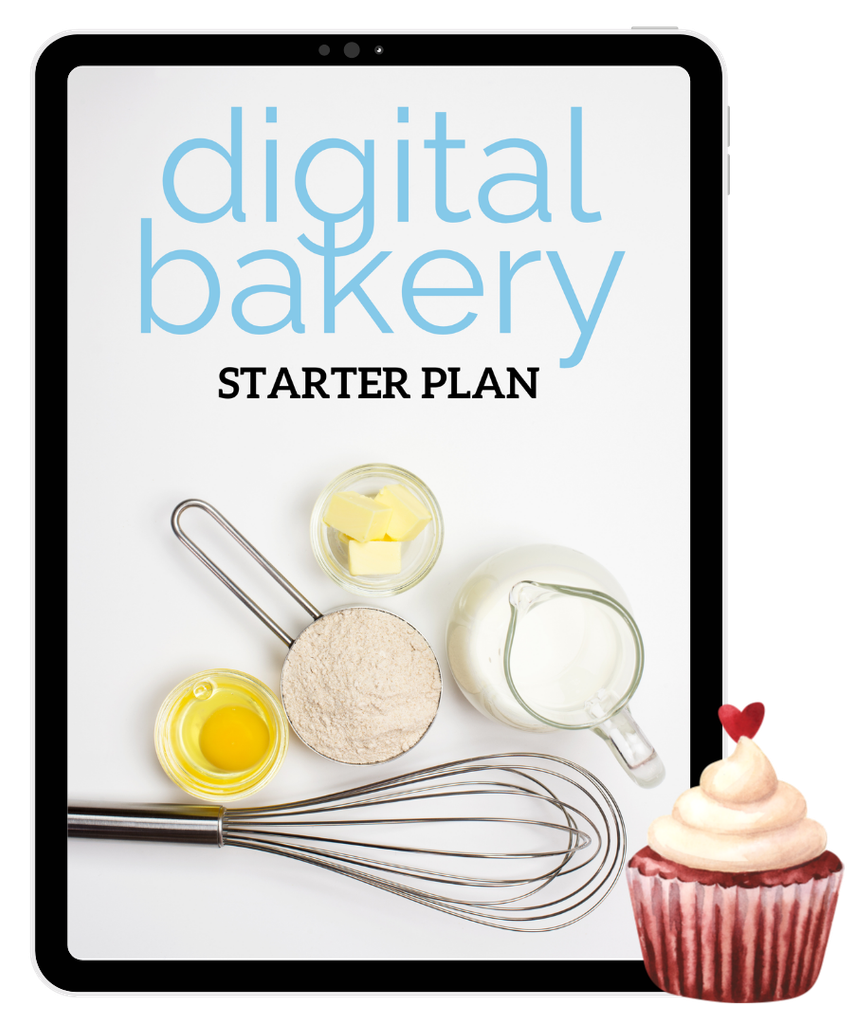
The Digital Bakery Starter Plan helps you narrow your ideas down to one product and work out whether there’s enough interest before you spend weeks creating it.
Do You Need a Huge Audience to Sell a Baking Ebook?
A large audience can certainly help a baker distribute a digital product, but audience size alone does not determine whether an idea is useful.
Product relevance matters.
A baker with a smaller audience of people who are particularly interested in sourdough, decorated cookies or wedding cakes may have a clearer route to selling a specialised resource than someone with a much larger but less focused following.
Before creating a large ebook, it can therefore be useful to validate the idea.
Look for repeated questions. Ask your audience what they struggle with. Pay attention to your most saved or shared educational posts. Consider offering a small free resource and measuring the response.
The aim is to find evidence that people care about the problem before spending months creating the solution.
Sabrine’s story illustrates this particularly well because the subject of her ebook was already connected to what people valued about her physical cakes.
How Bakers Can Turn Existing Expertise Into Digital Products
For many experienced home bakers and micro-bakery owners, the biggest obstacle to creating a digital product is not a lack of knowledge.
It is recognising which parts of that knowledge have value outside the physical product.
Years spent fulfilling customer orders can produce expertise in flavour development, recipe testing, decorating, production, pricing, storage, packaging, troubleshooting and dozens of other areas.
You do not necessarily need to package all of it.
Sabrine’s story demonstrates what can happen when one narrow area of expertise is developed deeply enough to stand on its own.
Her whipped ganache recipes began as part of the experience she wanted to create for her cake customers. They became something customers recognised, something other bakers wanted to learn and, eventually, something that could be packaged as a digital product and sold internationally.
For bakers exploring digital products, that is perhaps the most useful question to take away from her story:
What have you already learned, developed or perfected that someone else would find useful?
The answer may be much more specific — and much closer to your existing baking business — than you think.
Ready to Turn Your Baking Recipes Into a Digital Product?
Sabrine’s story shows that you do not necessarily need to create an enormous course or teach everything you know to get started. A focused recipe, technique or method can be enough to form the basis of a useful digital product when it solves a clear problem for the right audience.
If you already have a recipe or small collection of recipes you would like to package professionally, my Mini Recipe Ebook Template gives you a structure for turning that knowledge into a polished digital product without having to design an ebook from scratch.
And if what you want to teach is more method or technique-based than recipe-based, the Baker’s Book Template gives you room to organise the process, explanations and supporting guidance into a structured resource.
The goal is not to make your first digital product as big as possible.
It is to make it useful enough that the right person understands exactly why they would want it.